In the Hoop Mug Rug: A Designer’s Honest Review
As an embroidery designer who spends countless hours digitizing and testing files, I am always cautious about recommending new machine embroidery design assets to my peers and clients. We all know the frustration of downloading a file that looks stunning in the preview but turns into a bird’s nest of thread breaks and puckering on the hoop. Recently, I evaluated the In the Hoop Mug Rug available on Creative Fabrica to determine if it holds up for real-world production. This review is written from the perspective of a professional looking to integrate this item into a commercial workflow, whether for Etsy listings, craft fairs, or boutique merchandise.
First Impressions and Visual Appeal
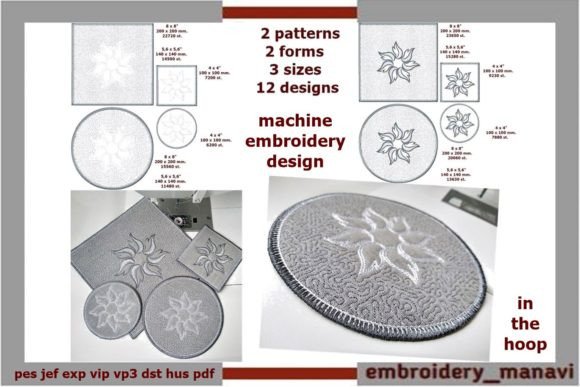
The immediate appeal of the In the Hoop Mug Rug lies in its versatility. Marketed as a quilt block, pot holder, placemat, or mug rug, it positions itself firmly within the House category of home decor. For a designer, this multi-functionality is a significant selling point. It allows us to market a single embroidery file across several niches. The visual mood is cozy and functional, appealing to customers who value handmade warmth in their kitchen spaces.
When examining the digital preview, the stitching personality appears balanced. It does not rely solely on dense fill areas, which can often lead to stiffness in a item meant to handle hot mugs or pots. Instead, it seems to utilize a mix of techniques that likely include satin stitch borders for definition and fill stitch areas for texture. This combination is crucial for maintaining the structural integrity of the finished product while ensuring it remains soft enough for daily use. The decorative appeal is understated yet elegant, making it suitable for modern farmhouse styles as well as traditional cottage aesthetics.
Performance in Real Embroidery Projects
The true test of any Creative Fabrica embroidery product is how it translates from screen to fabric. I considered this design for several potential applications beyond its primary purpose. While it is explicitly an in-the-hoop project, the design elements could inspire adaptations for other items. For instance, the motif could be isolated for a tote bag design or scaled down for a embroidered patch. However, for the intended use as a mug rug or pot holder, the construction method is key.
In-the-hoop projects are popular because they minimize finishing work. For small business owners, time is money. If the In the Hoop Mug Rug delivers a clean edge without requiring extensive trimming or hand-sewing post-embroidery, it adds immense value to your production line. I envision this working beautifully as a personalized gift. Adding a monogram in the center or along the border could elevate the perceived value, turning a simple kitchen accessory into a high-end custom item.
For those involved in commercial embroidery, consistency is vital. This design appears to have a clear structure that should reproduce well across multiple units. Whether you are creating a set of four for a holiday gift bundle or single units for quick sales, the repeatability of the design suggests it can handle batch production without significant variation in quality, provided your machine tension is calibrated correctly.
Practical Considerations for Stitching
Before loading the file onto your machine, there are several practical factors to address. First, consider the hoop size. In-the-hoop projects require precise hooping to ensure the closure mechanism works correctly. You must confirm that your machine’s hoop accommodates the specific dimensions of this file. Always check the product details on the Creative Fabrica page for exact measurements before purchasing.
Fabric choice plays a critical role in the success of this project. Since this item may be used as a pot holder or placemat, durability is essential. I recommend using medium-weight cotton or linen blends. Avoid stretchy fabrics, as they can distort the alignment during the in-the-hoop process. If you are using textured fabric, be mindful of how the stitch density interacts with the weave. A higher density might pull too tightly on loose weaves, causing puckering.
Stabilizer selection is another non-negotiable aspect. For a functional item like a mug rug, a cut-away stabilizer might provide too much stiffness, while a tear-away might not offer enough support during the stitching of dense areas. A high-quality wash-away stabilizer is often the best choice for in-the-hoop projects, as it leaves no residue and maintains the softness of the final handmade product. Always test on scrap fabric first. This allows you to check thread color contrast and inspect small details after stitching without risking your final material.
Additionally, consider the washing instructions. Items in the kitchen environment are prone to spills and frequent cleaning. Ensure that your thread colors are colorfast and that the stitch structure can withstand repeated washing without unraveling. Using polyester thread is generally advisable for its durability and sheen, which complements the applique design aesthetic often found in these types of projects.
Enhancing Product Value and Brand Consistency
From a business standpoint, the In the Hoop Mug Rug offers more than just a pretty pattern. It contributes to brand consistency if you specialize in home goods. By offering coordinated items—such as matching towels, aprons, or pillow covers—you create a cohesive collection that encourages larger purchases. The visual appeal of a well-stitched mug rug can significantly enhance your product photography. Clean lines and precise stitching photograph well, increasing customer engagement on platforms like Instagram and Pinterest.
Buyer trust is built on quality. When a customer receives a personalized gift that is neatly finished with no loose threads or misaligned edges, they are more likely to leave positive reviews and return for future purchases. This design, with its photo instructions, supports this goal by guiding even less experienced users through the assembly process. For seasoned designers, these instructions serve as a benchmark for expected outcomes, ensuring that the final product meets professional standards.
Furthermore, the ability to create printable mockups using the design assets can streamline your marketing efforts. High-quality mockups allow you to showcase the product in various settings without physically producing every color variant. This efficiency is crucial for digital product sellers and creative entrepreneurs who need to maintain a fresh inventory online.
Final Verdict and Licensing Notes
In conclusion, the In the Hoop Mug Rug is a solid addition to any embroidery designer’s library. It fits naturally into the Embroidery niche for home decor and offers practical utility for both personal use and commercial sales. Its strength lies in its versatility and the professional finish achievable through the in-the-hoop method. However, success depends on careful preparation. Always review the file details and licensing terms on the Creative Fabrica product page before selling finished items. Confirm compatibility with your specific machine model and verify the included file formats.
By taking the time to test on scrap fabric, choose appropriate stabilizers, and select high-quality threads, you can transform this digital file into a tangible asset for your business. Whether you are decorating your own home or building an inventory for your handmade shop, this design offers a reliable foundation for creating beautiful, functional art. Remember, the difference between a good product and a great one often lies in the details of execution. With proper technique, the In the Hoop Mug Rug can become a staple in your portfolio of custom apparel and home accessories.