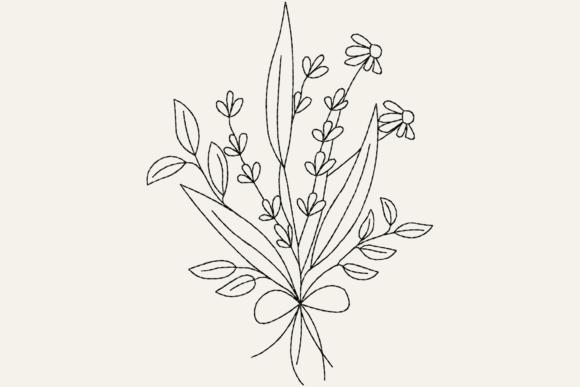
Line Art Bouquet Flower: A Designer’s Review
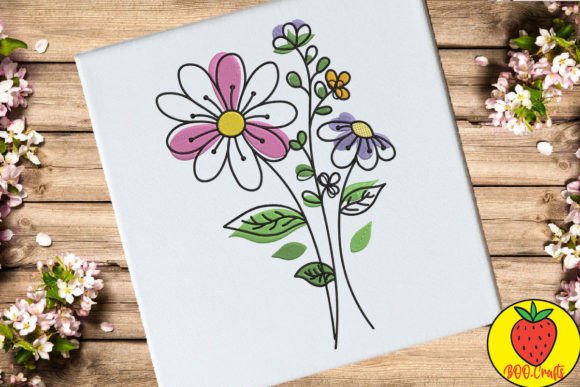
As an embroidery designer who has spent years digitizing and testing files for small businesses, I approach every new machine embroidery design with a critical eye. It is not just about whether the image looks pretty on a screen; it is about how that design translates into thread, how it holds up on fabric, and ultimately, how it serves the brand identity of the business using it. Recently, I reviewed the Line Art Bouquet Flower, a piece categorized under Outline Flowers, and I want to share my professional assessment of its potential for commercial embroidery and small business merch.
First Impressions: Elegance Meets Versatility
The first thing that strikes you about the Line Art Bouquet Flower is its deceptive simplicity. The description highlights a beautiful bouquet of forest and garden flowers, but the execution is where the value lies. By utilizing a line art style, the design avoids the heavy stitch density that often plagues floral motifs. This makes it feel modern, airy, and distinctly premium. For a boutique owner or an Etsy seller, this aesthetic signals sophistication without being overly ornate.
In the world of Embroidery, less is often more. Heavy, saturated designs can stiffen fabric and look dated. This design, however, leans into a minimalist approach that feels handmade yet polished. It strikes a balance between rustic charm and contemporary elegance, making it a versatile asset for various industries, from florists to creative studios.
Real-World Applications for Small Business Merch
When I evaluate a digital embroidery file, I immediately visualize it on actual products. The Line Art Bouquet Flower shines in several key areas for small business owners looking to elevate their branded merchandise.
- Branded Patches: This is perhaps the strongest use case. Because the design relies on outlines rather than solid fills, it creates a lightweight embroidered patch that does not add excessive bulk. These patches can be ironed or sewn onto denim jackets, canvas totes, or even packaging materials, serving as a tactile brand marker.
- Staff Uniforms and Aprons: For cafés, bakeries, or florist shops, staff apparel is a walking advertisement. An apron embroidery featuring this bouquet adds a touch of warmth and professionalism. The line art style ensures that the design remains legible and clean, even after frequent washing, which is crucial for workwear.
- Tote Bag Design: Textile bags are a staple for retail businesses. The description notes that this floral bouquet will decorate a T-shirt or a textile bag, and I agree. On a canvas tote, the open nature of the line art allows the natural texture of the fabric to show through, creating a high-end, organic look that appeals to eco-conscious consumers.
- Cap Embroidery: Placing this design on the side panel or the back of a cap can serve as a subtle accent. However, due to the curved surface of caps, the spacing of the lines must be precise to avoid distortion, a point I will address later.
Navigating Technical Challenges
While the aesthetic appeal is high, any experienced embroiderer knows that line art comes with specific technical challenges. Here is where you need to exercise caution when using the Line Art Bouquet Flower in production.
Stitch Density and Fabric Texture: Since this is an outline-based design, the stability of the stitches is paramount. On loose-weave fabrics or textured materials like terrycloth towels, thin lines can sink into the fabric or appear uneven. I strongly recommend using a cut-away stabilizer for garments that will undergo stress, such as T-shirts, to maintain the integrity of the lines. For kitchen towels, a tear-away might suffice, but testing is essential.
Small Patch Sizes: If you intend to use this as a tiny chest logo or a small label, you must check the detail level. Fine lines can break or become indistinguishable if scaled down too far. Before running a full batch of custom apparel, always stitch out a test sample at your intended size. If the lines merge or look jagged, you may need to simplify the design or increase the size.
Thread Color Contrast: Line art relies entirely on contrast. On dark uniforms, using a light thread color is necessary for visibility, but you must ensure the thread sheen does not create glare that obscures the delicate details. Conversely, on white tote bags, a dark, matte thread will provide the crispest definition.
Enhancing Brand Identity and Customer Trust
Why does the choice of design matter for your bottom line? Because consistent, high-quality visual assets build trust. When a customer receives a handmade product with a professionally executed Line Art Bouquet Flower emblem, it reinforces the perception of quality. It tells the buyer that attention to detail was paid not just to the product, but to the presentation.
For creative studios and local businesses, this design acts as a cohesive element across different touchpoints. Imagine seeing the same floral outline on a barista’s apron, the shop’s tote bags, and the thank-you cards included with online orders. This visual consistency strengthens brand recognition. It moves the item from being a mere commodity to a piece of branded merchandise that customers are proud to display.
Practical Designer Notes for Production
Before you purchase this embroidery file and start stitching, here is my checklist for ensuring a successful run:
- Test in Black and White First: Strip away the color variables. Stitch the design in black thread on white fabric. This reveals any issues with spacing, jump stitches, or line continuity that color might hide.
- Verify Hoop Size and Placement: The description mentions tablecloths and kitchen towels, which implies a larger scale, but also T-shirts and bags. Confirm the maximum hoop size required for the largest version of the design. Ensure your machine can accommodate it without re-hooping, which can cause alignment errors.
- Create a Printable Mockup: Before committing to thread, place the design digitally on photos of your actual products. This helps you judge scale and placement visually. A printable mockup can also be used for client approval if you are doing custom embroidery work.
- Check Commercial Licensing: As a business owner, you must confirm that the license included with the digital embroidery file allows for commercial use. Never assume; always read the terms to protect your business from legal issues.
- Compare With Other Design Assets: Place the Line Art Bouquet Flower next to your existing logo and fonts. Does it complement them? Does it clash? Your design assets should work together harmoniously to tell a unified brand story.
Final Verdict
The Line Art Bouquet Flower is a strong contender for small business owners looking to add a touch of botanical elegance to their product line. Its strength lies in its versatility and modern aesthetic. However, its success depends entirely on proper execution. By paying attention to stabilizer choice, thread contrast, and scale, you can transform this simple outline into a powerful tool for brand building. Whether you are creating an embroidered patch for a jacket or detailing a linen apron, this design offers the professional finish that today’s consumers expect from high-quality handmade products.